
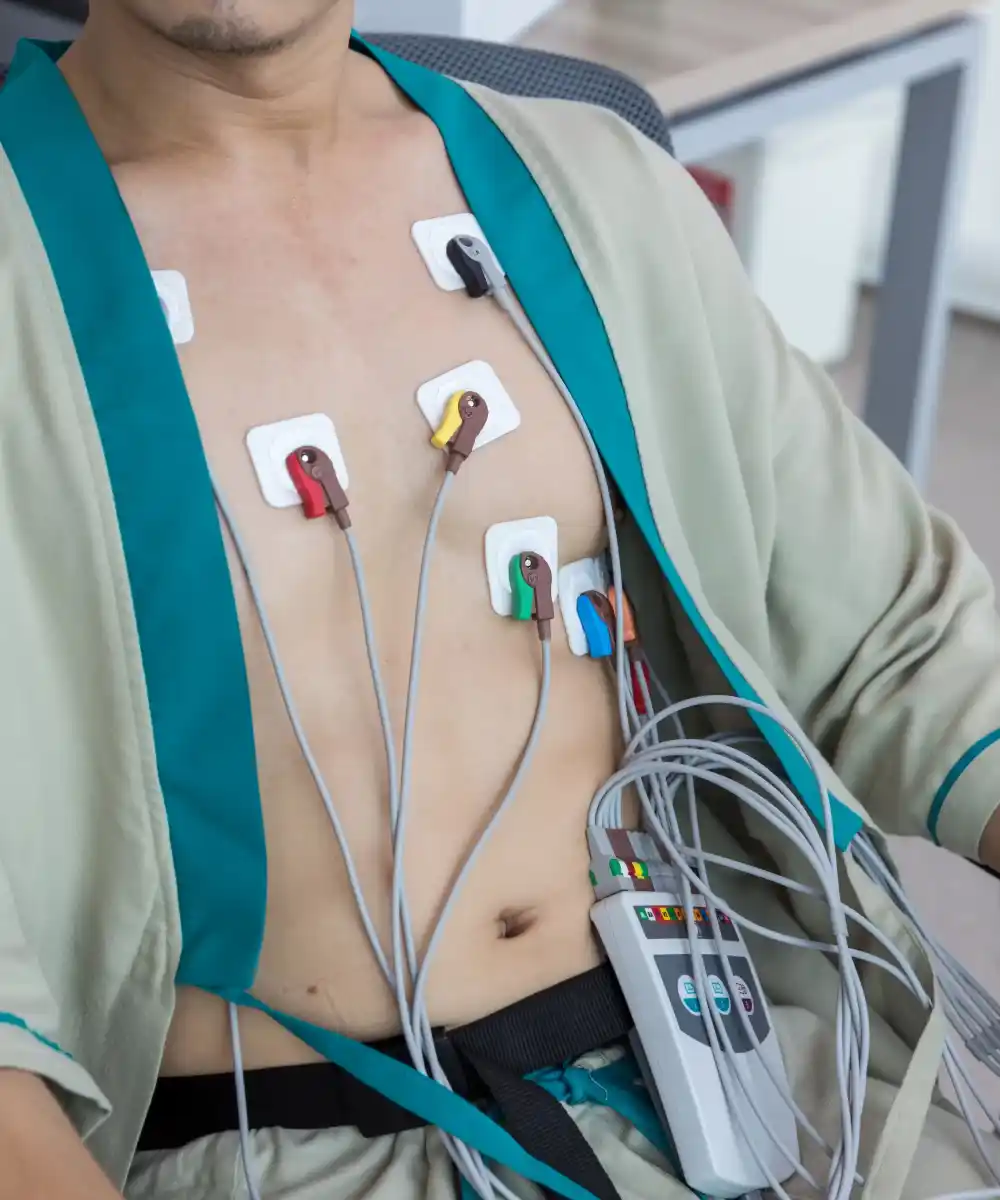
Holter Monitoring
Holter Monitoring is a non-invasive diagnostic test that continuously records the heart’s electrical activity (ECG) over 24 to 48 hours or longer, while the patient goes about normal daily activities. It helps detect irregular heart rhythms (arrhythmias) that may not appear during a routine ECG.
Why Is Holter Monitoring Done?
Holter monitoring is recommended to:
-
Detect abnormal heart rhythms
-
Evaluate unexplained dizziness or fainting
-
Investigate palpitations or irregular heartbeat
-
Monitor heart rhythm after pacemaker or AICD implantation
-
Assess effectiveness of heart medications
How Is Holter Monitoring Performed?
-
Small electrodes are attached to the chest
-
Electrodes are connected to a portable recording device
-
The patient wears the device for 24–48 hours (or as advised)
-
Normal daily activities are continued during monitoring
The device is lightweight and easy to carry.
Benefits of Holter Monitoring
-
Continuous, real-time heart rhythm recording
-
Non-invasive and painless
-
Detects intermittent heart rhythm abnormalities
-
Helps guide accurate diagnosis and treatment
-
Safe for all age groups