
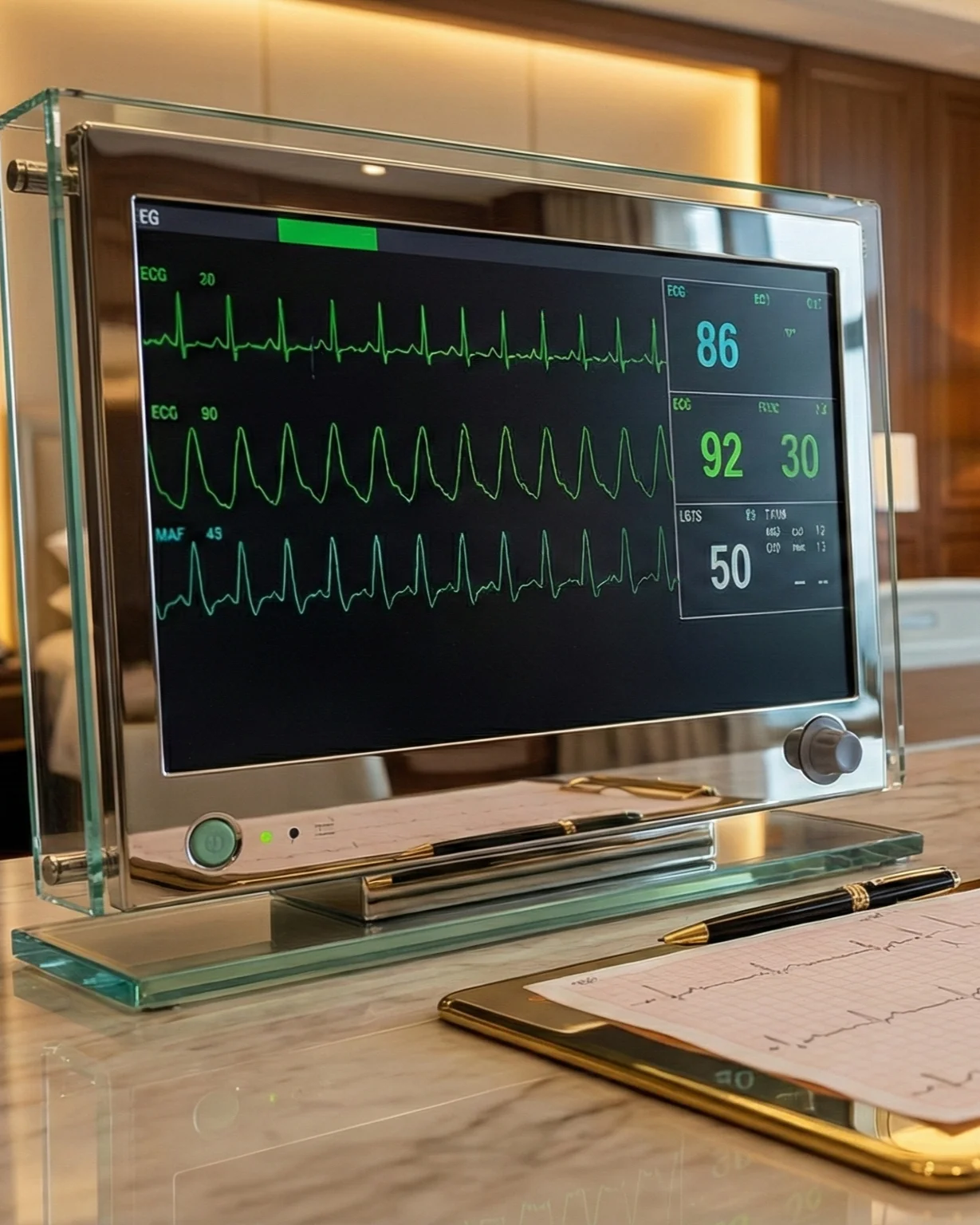
ECG - Electrocardiogram
An Electrocardiogram (ECG) is a simple, safe, and non-invasive test that records the electrical signals generated by your heart each time it beats. During the procedure, small electrodes are placed on your skin—usually on your chest, arms, and legs—to detect these electrical impulses. The process is completely painless and only takes a few minutes.
ECGs are widely used to diagnose a variety of heart conditions, such as irregular heart rhythms (arrhythmias), heart attacks, and other disorders that affect the heart's electrical activity. Your doctor may recommend an ECG if you are experiencing symptoms like chest pain, palpitations, dizziness, or shortness of breath. Even without symptoms, an ECG can provide valuable insights into your heart's health as part of a routine checkup or screening before surgery.
The results of an ECG allow healthcare providers to quickly evaluate the heart’s function and detect potential problems early. A key advantage of this test is its ability to deliver rapid information, helping guide important decisions about further investigations or treatments.
In our clinic, we use advanced ECG equipment and ensure the process is performed in a comfortable, supportive environment. The use of a black and white image above serves to emphasize the precision and clarity offered by an ECG, directing attention to the most important aspect: your heart health.