
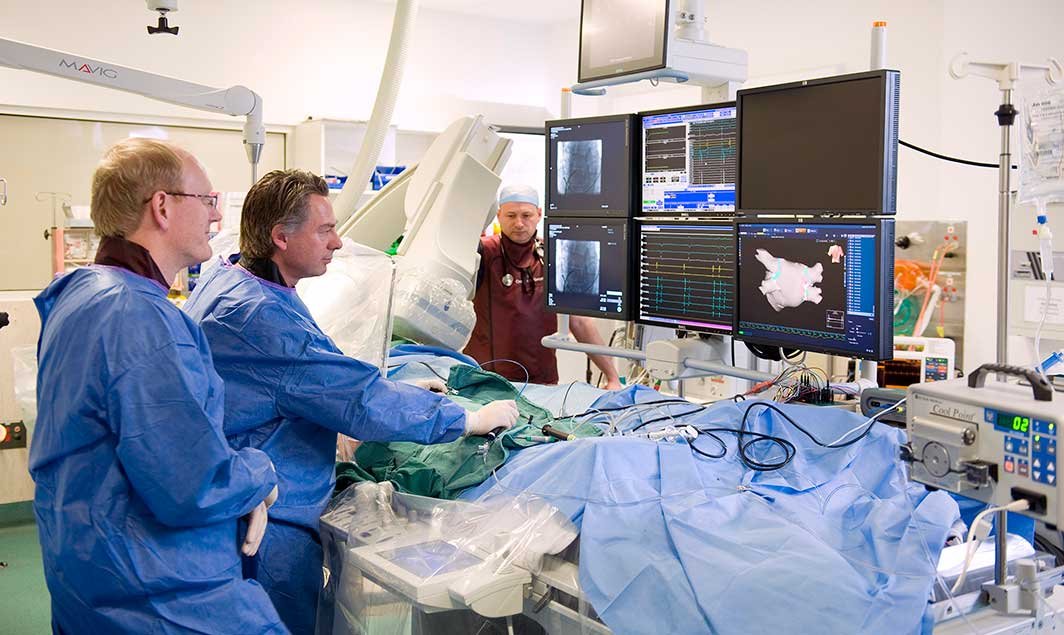
Electrophysiology study eps and radiofrequency ablation RFA
An Electrophysiology Study (EPS) is a specialized cardiac test used to evaluate the electrical activity of the heart. It helps doctors identify abnormal heart rhythms (arrhythmias) and determine their exact origin within the heart.
Why is EPS done?
EPS is recommended to:
-
Diagnose fast or irregular heartbeats
-
Identify the cause of palpitations, dizziness, or fainting
-
Assess risk of sudden cardiac arrest
-
Decide the need for ablation, pacemaker, or ICD
-
Evaluate effectiveness of anti-arrhythmic medications
How is EPS performed?
-
Thin flexible wires (catheters) are inserted through a vein (usually in the groin)
-
Catheters are guided to the heart under X-ray imaging
-
Electrical signals of the heart are recorded and analyzed
-
Abnormal rhythm pathways are precisely located
Is EPS safe?
Yes. EPS is a minimally invasive and safe procedure, performed by experienced electrophysiologists in a controlled cardiac catheterization lab.
Radiofrequency Ablation (RFA)
Radiofrequency Ablation (RFA) is a minimally invasive treatment used to cure abnormal heart rhythms by destroying the tiny area of heart tissue responsible for the arrhythmia.
When is RFA recommended?
RFA is commonly used to treat:
-
Supraventricular Tachycardia (SVT)
-
Atrial Flutter
-
Atrial Fibrillation (AF)
-
Ventricular Tachycardia (VT)
-
Wolff-Parkinson-White (WPW) syndrome
How does RFA work?
-
After locating the abnormal pathway during EPS
-
Controlled radiofrequency energy (heat) is delivered
-
The faulty electrical tissue is destroyed
-
Normal heart rhythm is restored permanently
Benefits of RFA
-
High success rate (90–98% for many arrhythmias)
-
No open surgery required
-
Short hospital stay
-
Long-term relief from arrhythmias
-
Reduced need for lifelong medications