
Leadless Pacemaker
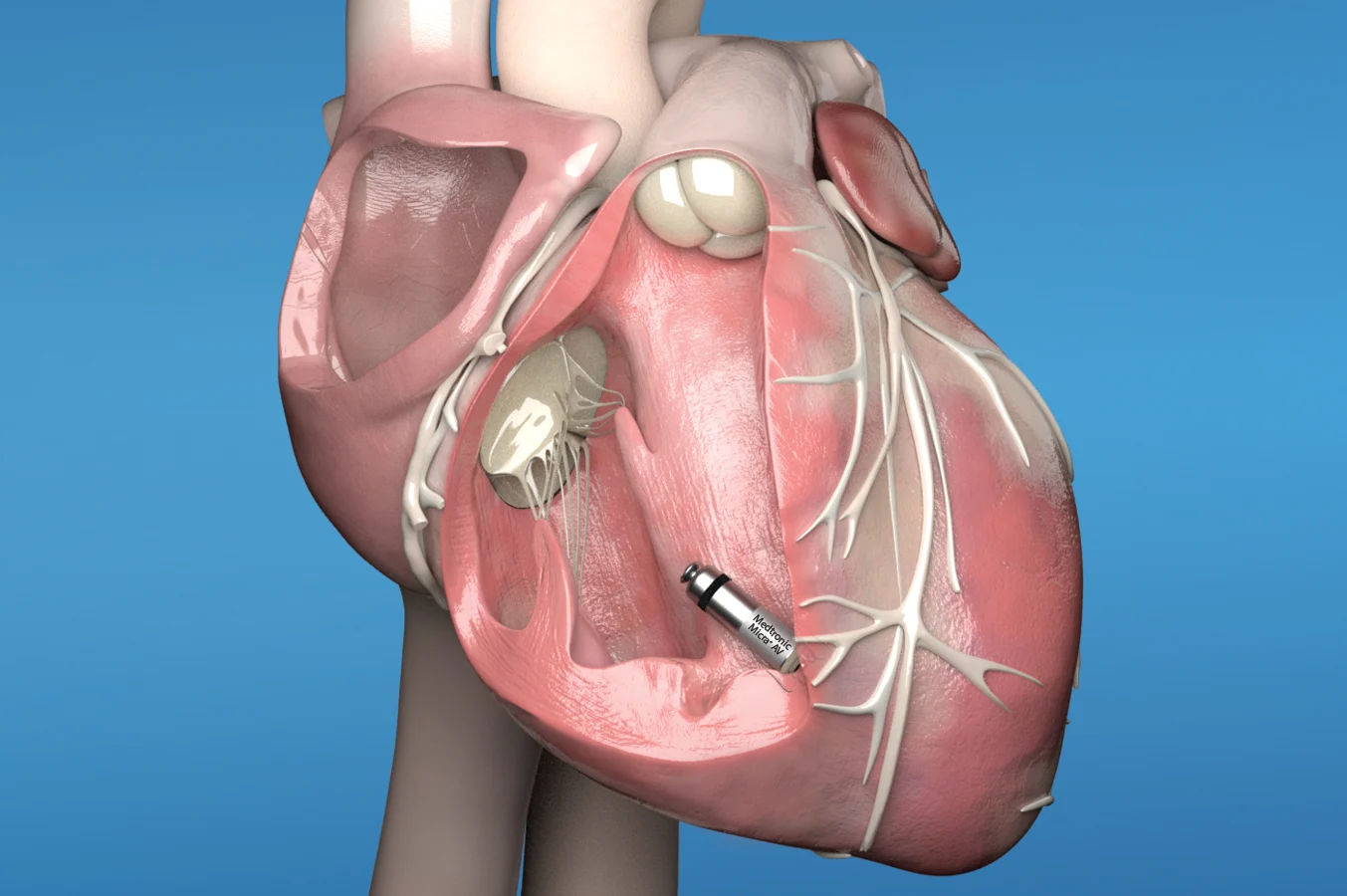
A Leadless Pacemaker is a next-generation cardiac pacing device that helps regulate abnormal heart rhythms without the use of traditional wires (leads) or a surgical pocket under the skin. The device is extremely small—about the size of a large capsule—and is implanted directly inside the heart through a minimally invasive procedure.
Who Needs a Leadless Pacemaker?
A leadless pacemaker may be recommended for patients who:
-
Have a slow heart rate (bradycardia)
-
Require single-chamber ventricular pacing
-
Have high risk of infection from traditional pacemakers
-
Have limited or blocked veins
-
Prefer a minimally invasive pacing option
How Is a Leadless Pacemaker Implanted?
-
The procedure is performed under local anesthesia
-
The device is delivered through a catheter inserted via a vein in the leg
-
The pacemaker is positioned directly inside the right ventricle
-
The device is secured and tested for proper function
The procedure typically takes less than 1 hour.
Benefits of a Leadless Pacemaker
-
No leads or chest incision
-
Lower risk of infection
-
No visible device or scarring
-
Faster recovery and minimal discomfort
-
Improved patient comfort and mobility